
I have not blogged in quite a while. Partly because I have a new job but mainly the work involved in analysing nearly a thousand charts a week leaves me pretty frazzled. Looking at my stats I have nearly 1,200 people in the US that read my ramblings. Other countries are negligible apart from China, Israel and Germany. My own country Ireland only musters a pathetic 5.
I have refined my slow trend following model to reduce trades and stay in successful trends longer. I have attached all changes and positions since January 2026 below. Scroll down if you want the figures and not my biased market comment. I would read this one though!
So where do we start? Lets look at the big picture and that has to be the big daddy, the US S&P500. On my trading journey I have looked at many systems and styles. One of them is Fibonacci analysis. Practically, I found it useless as reference points are very hard to spot. Afterwards it’s easy. However if you take a twenty year time horizon, it can point to some very interesting turning points well in advance. The reference points here are very clear. The low after the 2008 financial crash and the high just before Covid and its low. are clearly visible as reference points. Using Fibonacci Projection it points to a target for the S&P500 of 7,643.50. In June it hit this level and faded away. Who says voodoo technical analysis doesn’t work?
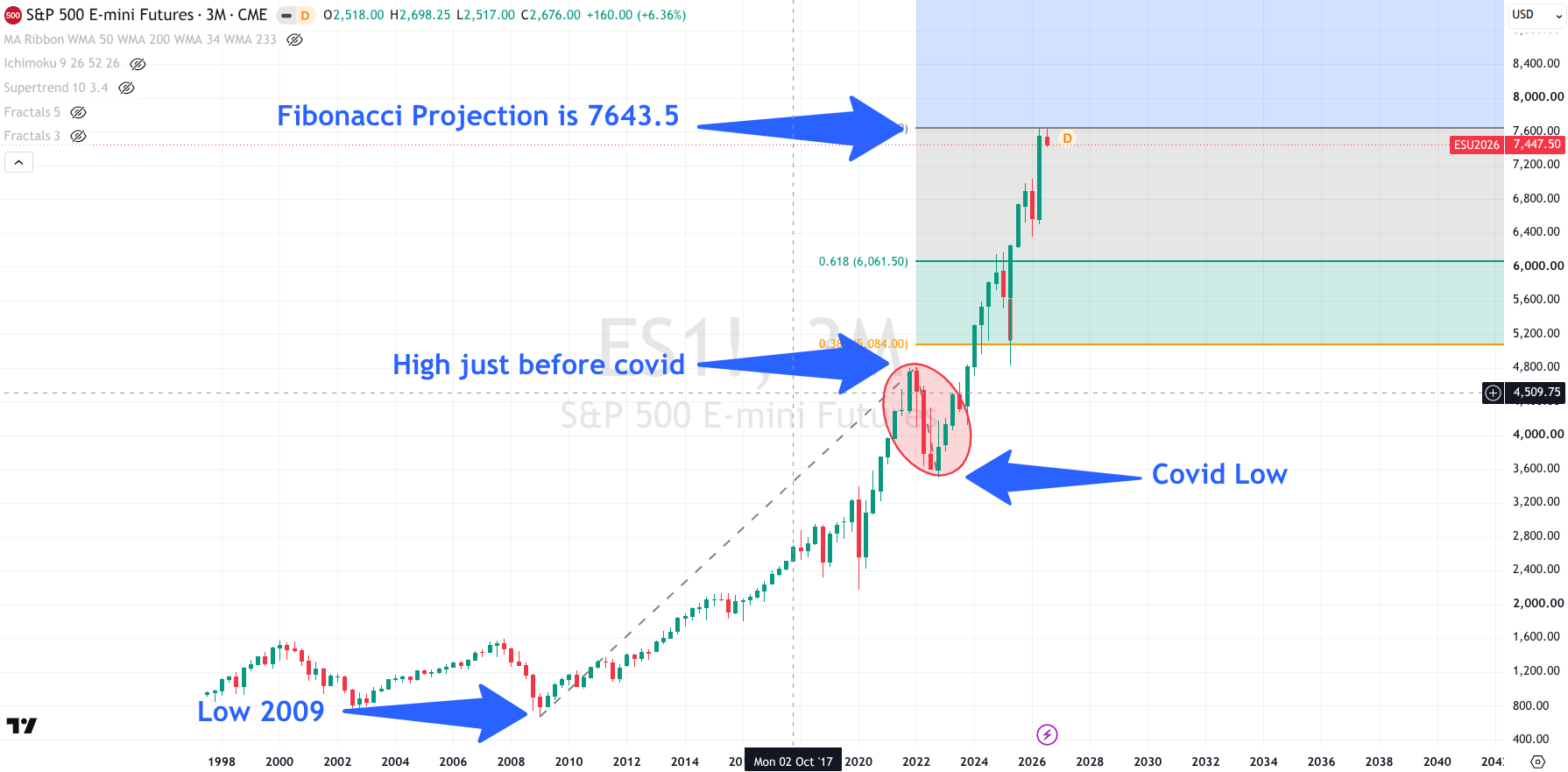
This does not mean that a crash is coming but for the market to reach newer highs I believe it has to drop significantly to regain momentum to challenge this hurdle. I liken it to a trampoline. You have to go down hard to bounce back higher again. The Covid correction in the red circle is a perfect example of this. I believe the S&P500 has reached a major top for the moment. There is no sell signal yet but I believe it will be the start of a significant drift lower. A nice way of saying a drop of 20-50% is beginning.
Booms are characterized by excessive confidence and malinvestment. Or as Robert Schiller called it ‘Irrational Exuberance’ in his 2000 book by the same name. His analysis hinges on using ‘cyclically adjusted price to earnings ratios’. He predicted the ‘Dot Com’ bubble which led to a collapse of the Nasdaq by over 80% in the next two years. This is long forgotten by today’s sharp eyed investment managers and economists. Using his metrics today would logically conclude a serious drop is imminent.
They seem to suffer from certain biases particular to those that give investment advice like fund management houses or economists. You see they all work for someone, they have no skin in the game as Nicholas Taleb likes to say. They are focused on the monthly paycheck and a bonus. And you don’t get that giving serious truthful analysis. In 2003 there was a global settlement between banks and regulators on analyst research. Investment bankers were barred from influencing analyst compensation. As of December 2025 this settlement ended in favour of more flexible rules overseen by an industry association. Analysts don’t live in a bubble. They value management access for their institutional investors who buy their research. And of course they want to get on in their company. In some way it’s understandable. Especially when it came to the recent SpaceX IPO. Overt conflicts of interest can be settled with laws and legislation but they don’t remove incentives. The bankers didn’t have to tell the research part of their house what conclusion to come to, to get what they wanted. Who pays the piper, always ask that question and simply follow the money.
Economists and fund managers may look like idiots and talk like idiots but don’t let that fool you. They really are idiots. Like a butterfly they flit and turn plagiarising each other, building their castles in the sky. As Groucho Mark said, “Those are my principles, and if you don’t like them… well, I have others.”
A good example of this is the recent SpaceX IPO. All the top investment banks research arms fell over themselves with potential target prices. Raymond James put a target of $800, Morgan Stanley $300, Deutsche Bank $255, Macquarie $250, Bank of America $235, Goldman Sachs $205. A research note from Deutsche Bank by a prominent economist called SpaceX “the apex of civilizational ambition, oftentimes expressed in steel and fire, bending the arc of history.” After the IPO I sent this chart to a few who had invested. They thought I was mad. It’s the last time I give advice to anyone who has made up their minds.
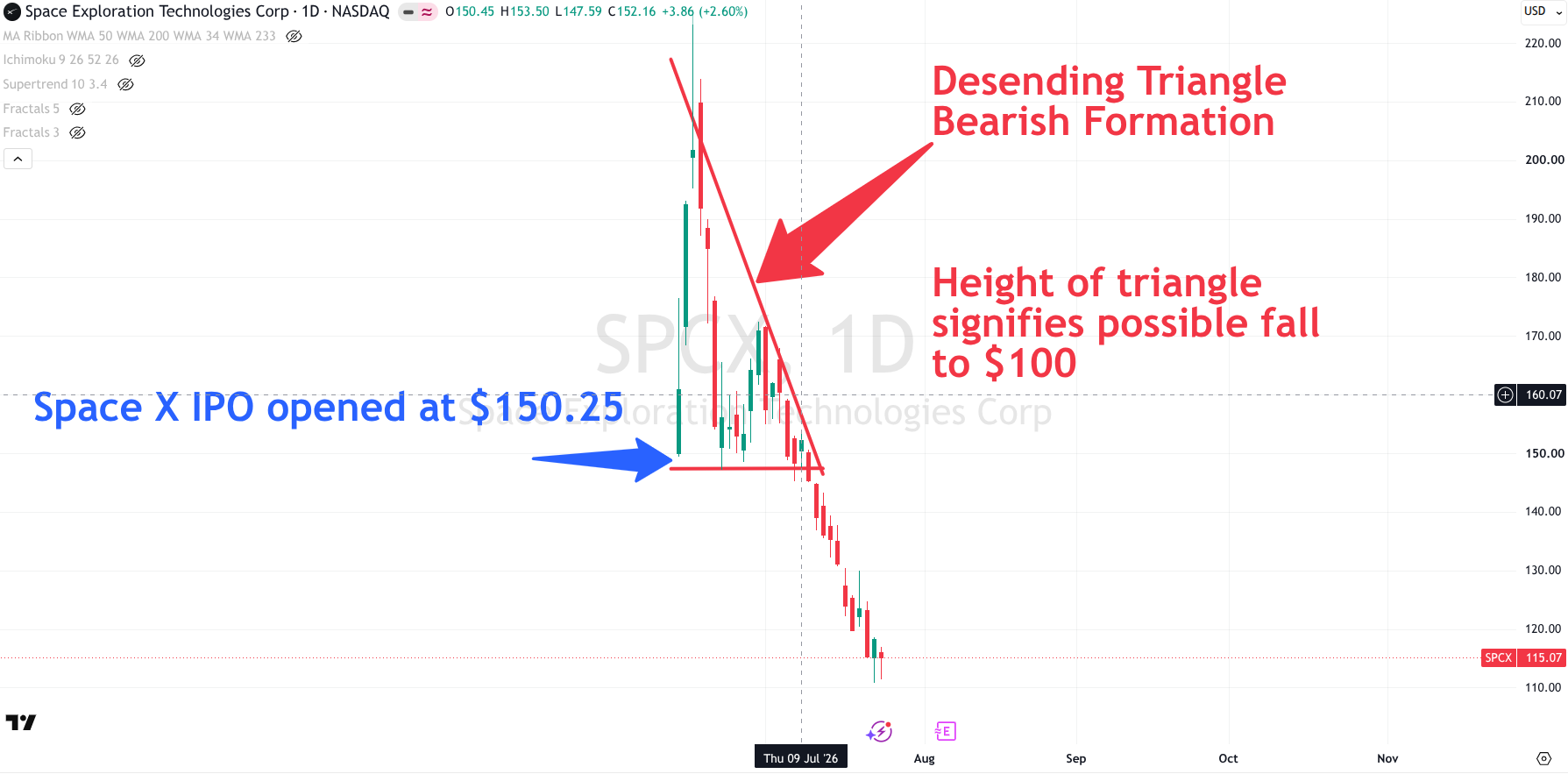
Well SpaceX is now down 23.41% from its opening IPO price at $150 to $115.07 on Friday. It reminds me of the 2008 Financial crisis in Ireland. Irelands two largest wealth managers Davy’s and Goodbody’s never once gave a sell rating on any Irish Bank. So let me give you a little perspective to focus your mind. In 2007 Bank of Ireland reached a high of €18.20 and eventually fell to €00.07. That’s a 99.61% drop. The silence was deafening from their research teams.
SpaceX, a company that lost $4.90 Billion last year. Forget about the fundamentals and just follow the lemmings off the cliff because the smart people know better. Forget about all the stuff regarding valuation metrics and just buy it. My mother once explained this kind of irrational exuberance when I said something like such and such thinks its a great idea. Her answer was would you put your hand in the fire if they told you to?
My final comments are on four companies that have towered over the stock market for the last twenty years. Google, Microsoft, Meta and Amazon. The first three had the most profitable business models in corporate history. They basically printed money. The first three have grown their profits over 400% over ten years and Amazon 1,650%. They deserve their success and phenomenal share price valuation.
Now what’s changed? Very simply they were cash rich but now as they have all announced that they are hyperscalers, everything has changed. They are abandoning their old business models for something less profitable and uncertain. They are investing in ‘AI models’and ‘Data Centres’, smart man power and physical infrastructure to win the new AI race. As in the film Highlander, “immortal beings must fight with swords until only a single survivor remains to win the ultimate prize”.
The recent book 1873: The First Great Depression and the Making of the Modern World by Liaquat Ahamed is especially prescient. Especially as he wrote one of the definitive books on the 1929 Wall Street Crash called, Lords of Finance: The Bankers Who Broke the World.
Why is this important? The brutal economic rivalry between four railroad companies was a direct catalyst for the financial collapse known as the ‘Panic of 1873’. Four companies entered into an intense competition to control the “Four Great Trunk Lines” of the eastern US to control the lucrative freight traffic between Chicago and the Atlantic seaboard. There was only one winner, ‘The New York Central Railroad’ under Cornelius Vanderbilt.
Google, Microsoft, Meta and Amazon are doing something very similar now. The rail lines by the four companies were snapped up and used to great profit but not by the original builders. The same could be true now of data centres the big four are building. What makes them similar is the debt they are incurring.
A term over the last few decades has been, “De-Equitisation”. It’s a fancy word for a company buying back its own shares. Google, Microsoft and Meta have spent nearly $800 Billion buying back its own shares in the last ten years. Everyone wins. The Nasdaq, the S&P500, and the other main stock markets where they or their suppliers are listed. Now they don’t have the spare cash as they are building data centres and investing in AI models. Don’t forget, the performance of these companies has supported shares across the globe. So if there is any correction it will not be buoyed by them buying back their own shares as Meta did in 2021-2022. They purchased nearly $80 Billion of their own shares. So one leg of the table is breaking. In case you think I’m scaremongering, the total investment they are making in new technology(new rail tracks) is larger relative to US GDP than the housing boom of 2007.
Of course we should not worry as the geniuses I talked about earlier at the big financial houses say there is nothing to worry about and that they in unison all expect these hyperscalers to grow at a rate much faster than ever. On a bright note, Apple is the one not playing this game. As a late entry it seems to be waiting on the sidelines and snap up a fallen hero. Maybe that’s why it’s share price is still outperforming. Google is hanging in and Meta and Microsoft are now a sell for me.
Regarding the economy, investors are no longer focused on how quickly inflation might continue to ease. They were asking whether an energy shock could force the Federal Reserve to tighten again. The FED meets this week. I don’t expect them to raise rates but there is one coming in September? Warsh will be a good boy until then and do what Trump tells him to do. Yields on short term bonds are increasing which signifies trouble is coming. I mentioned before that the safest place to be is in Government securities with a maturity of less than three years. Who is going to give you nearly 4.5% with no risk. That’s of course if you trust the world’s most indebted nation. Something to talk about in the future.
I won’t talk about the movements in the international equity markets as I have gone on enough. You can never pick the highs or the lows but I believe we are at one at the moment. I will let my performance be the ultimate judge. Only time will tell.
Enjoy the summer, Pearse.
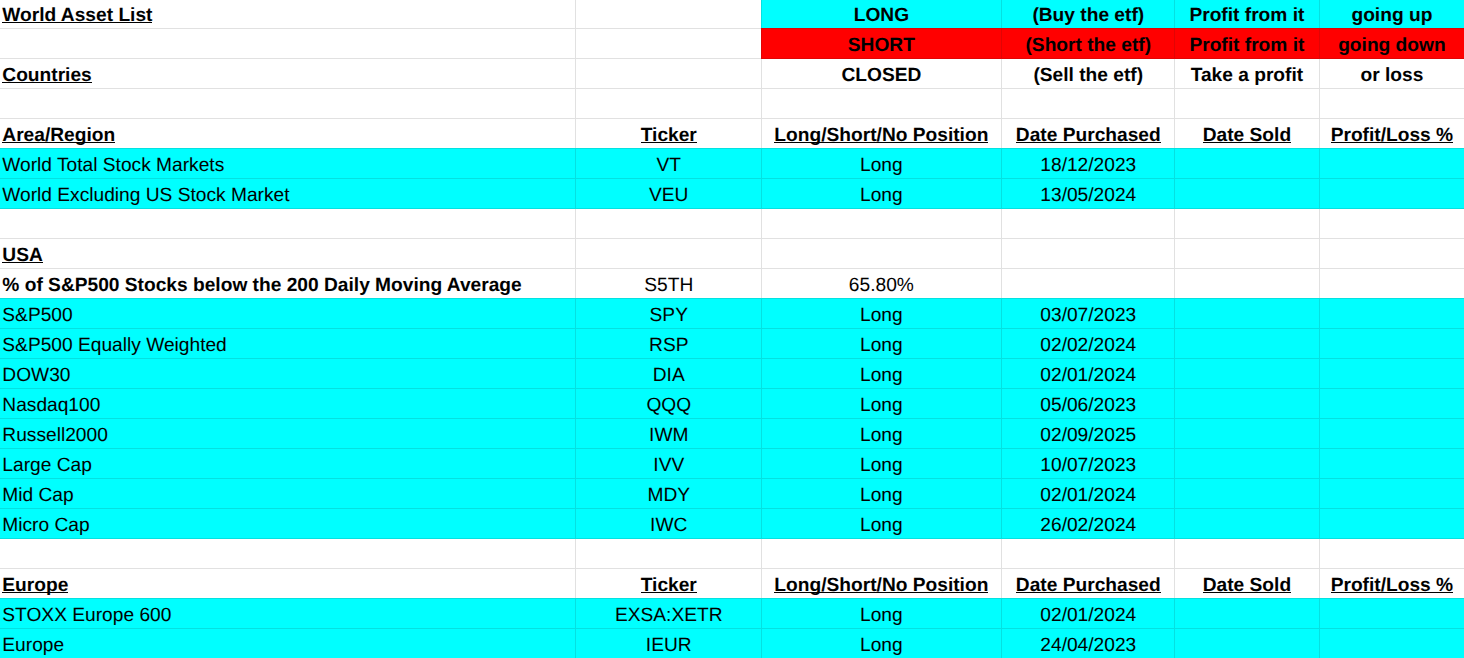
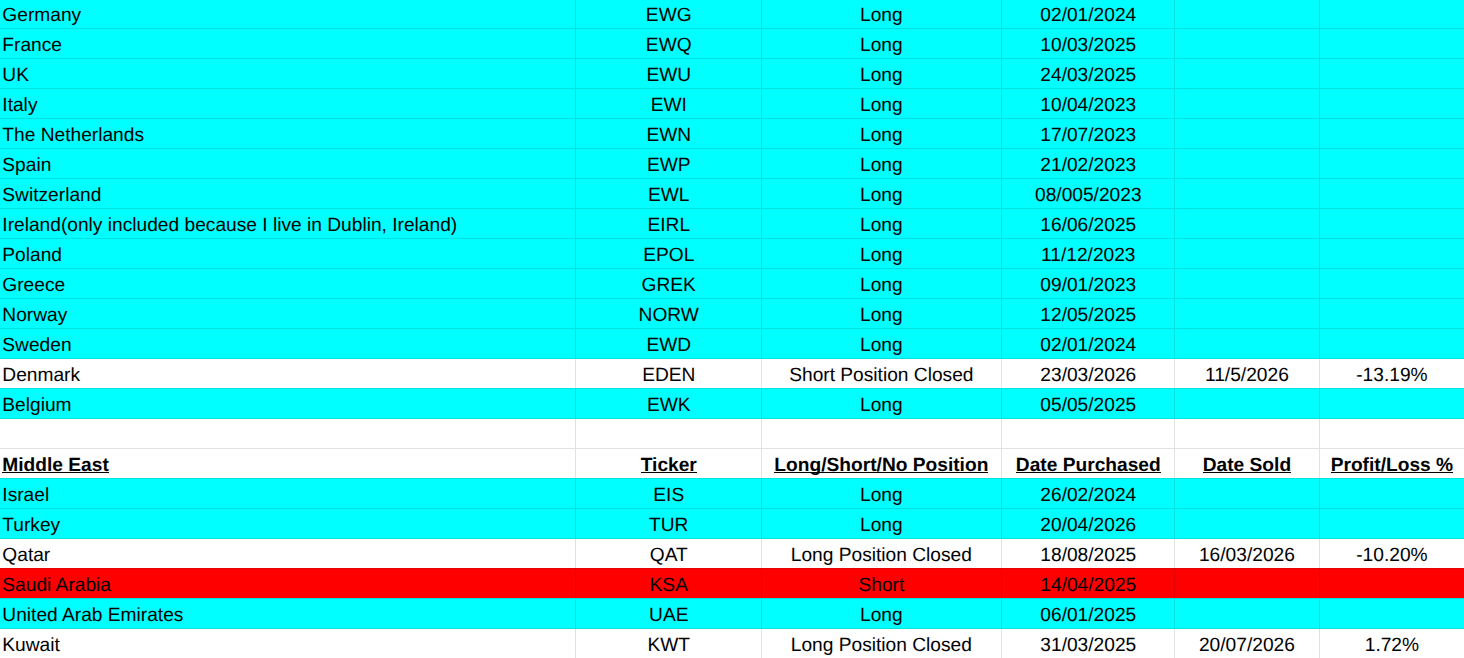
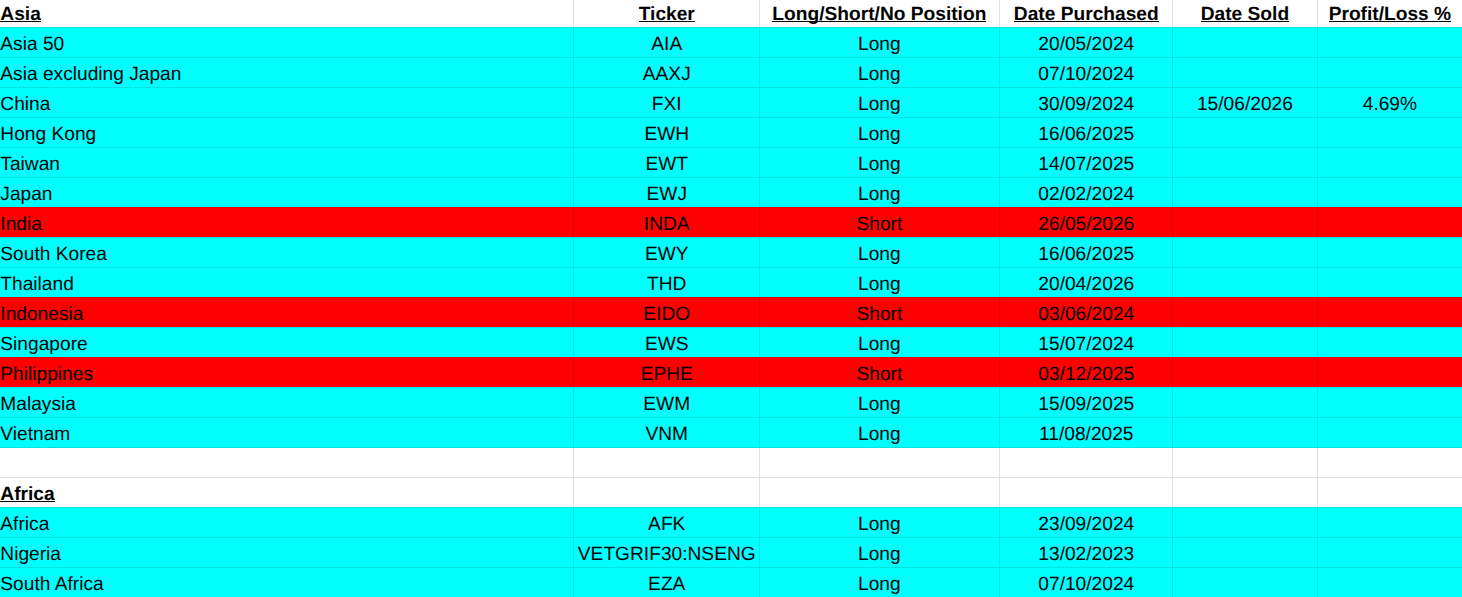
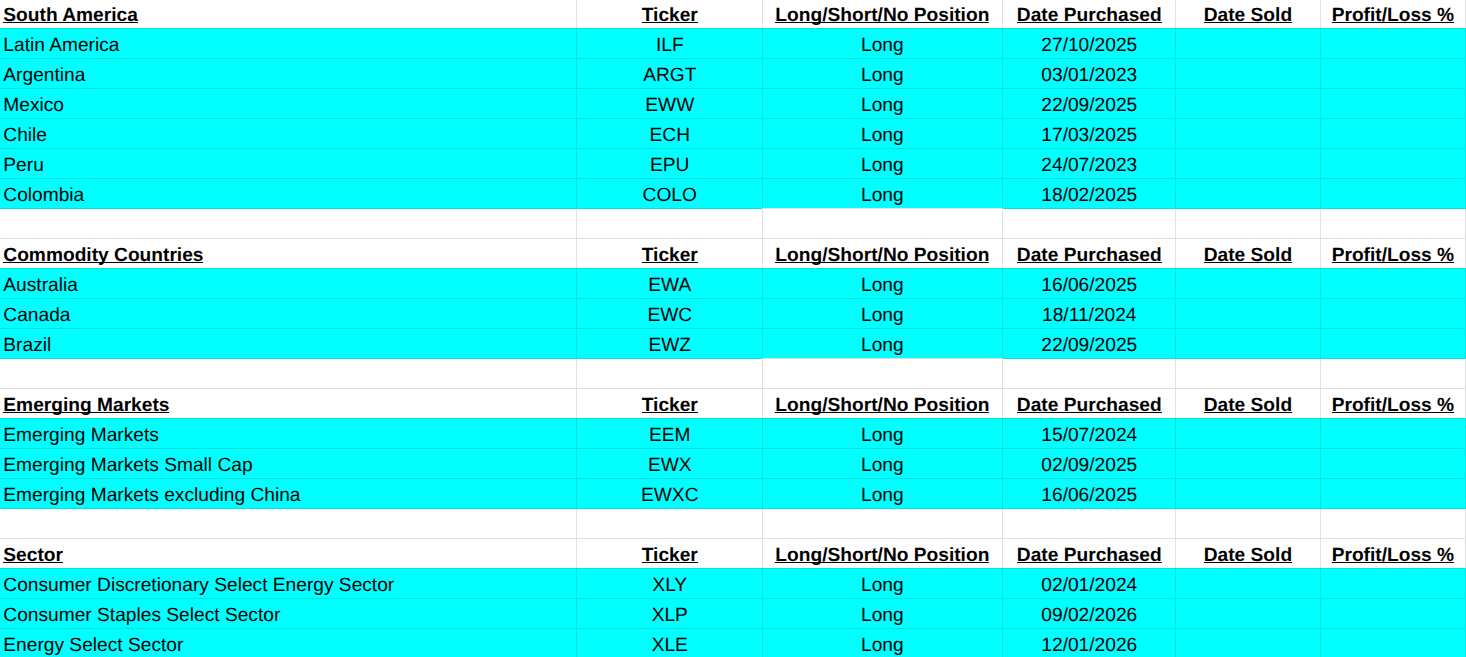
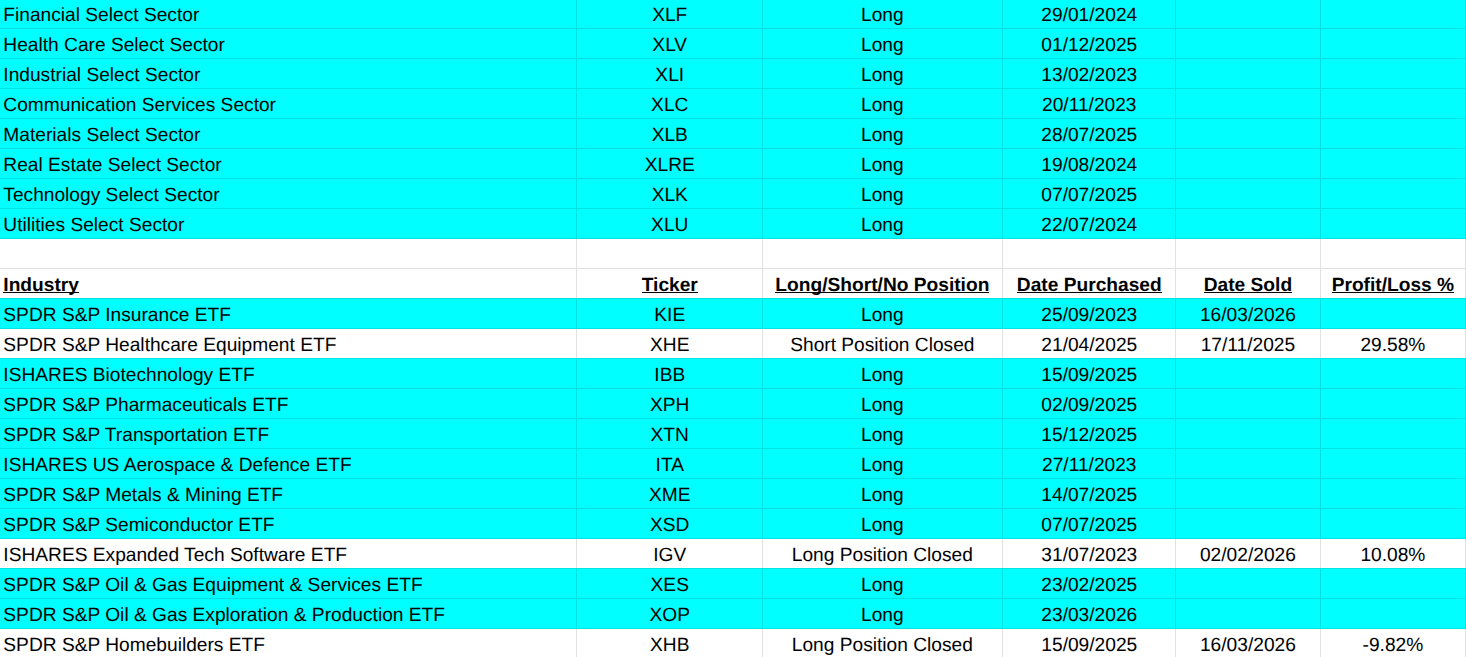
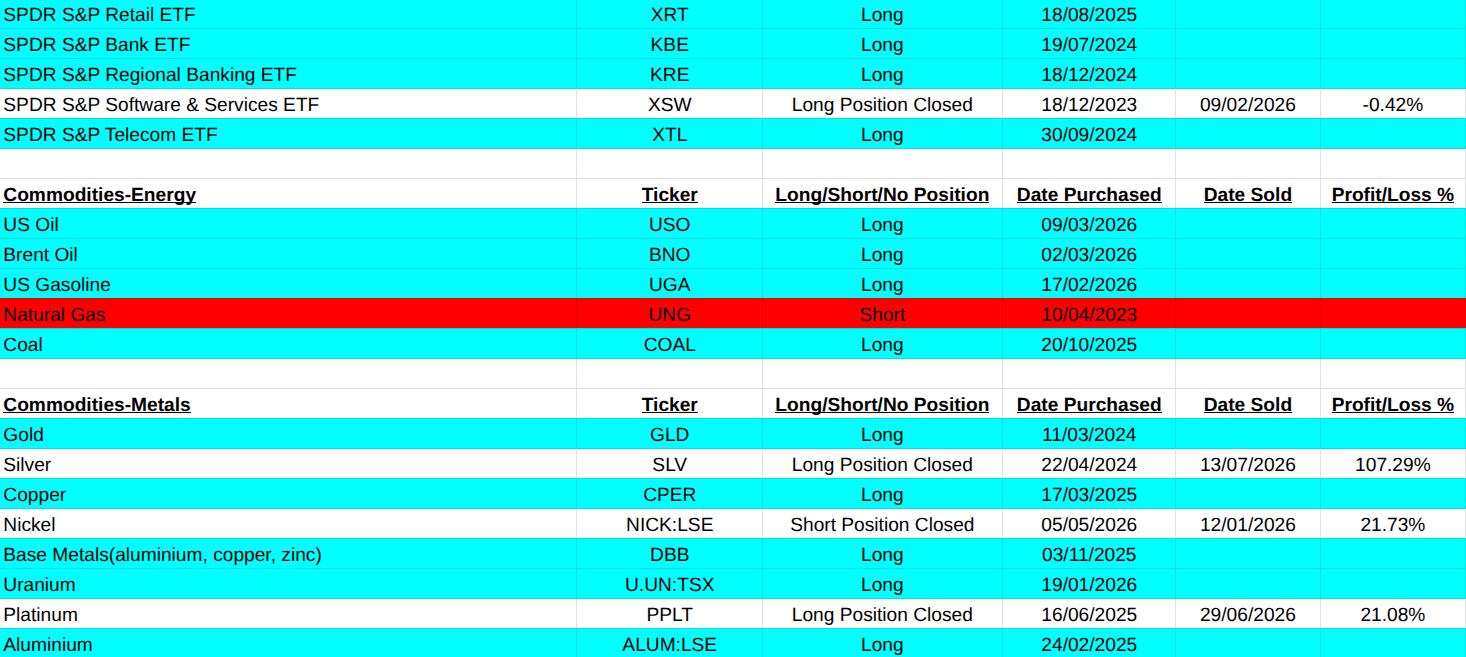
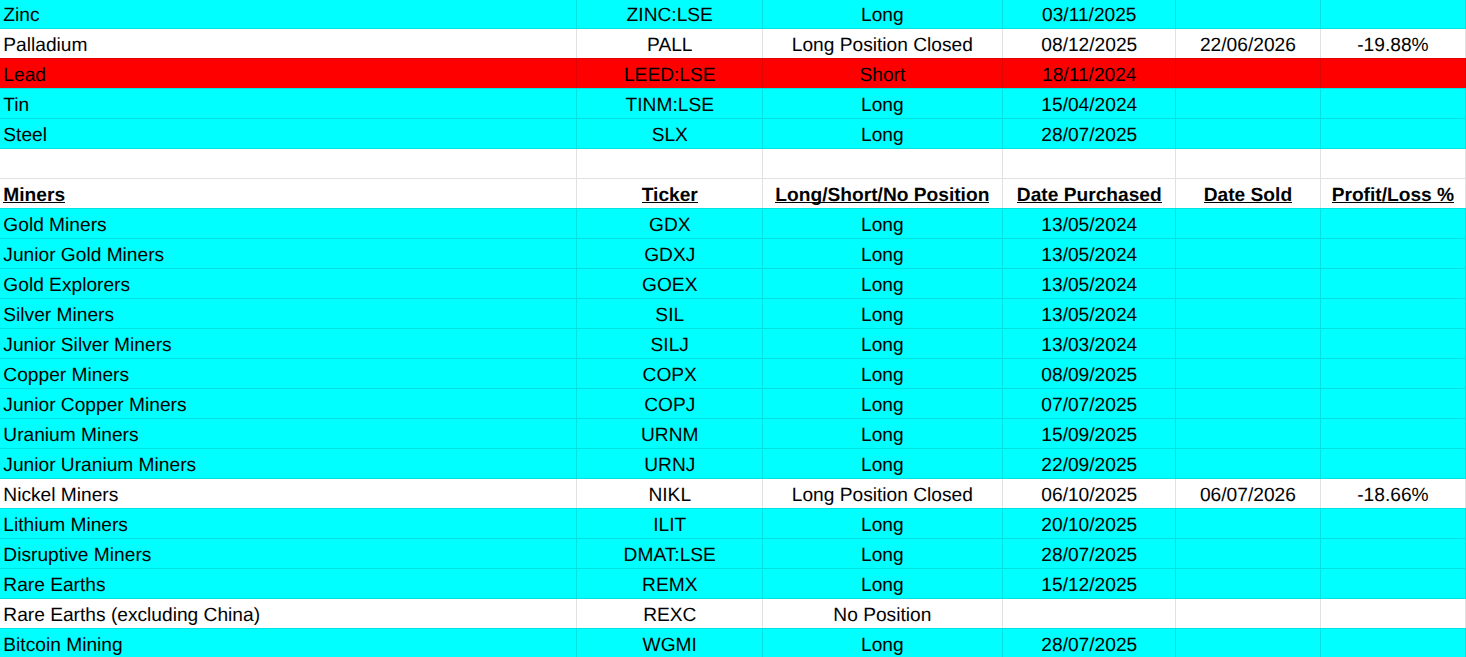
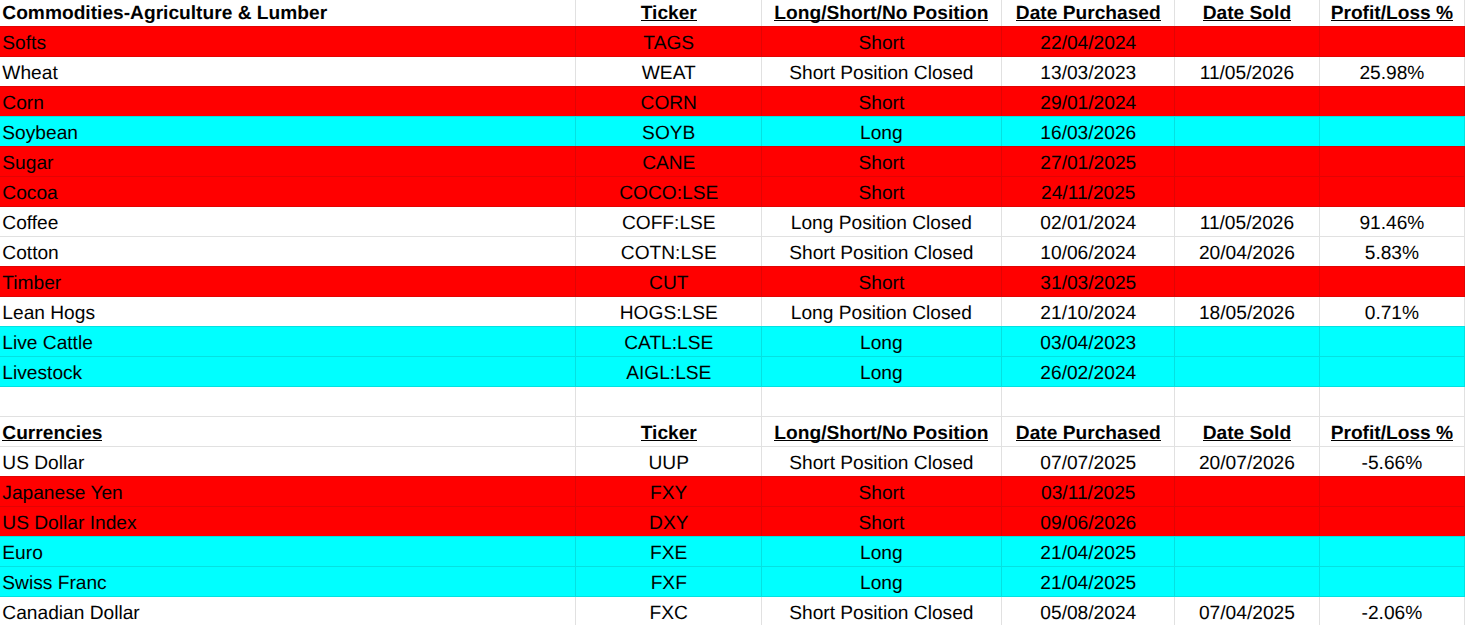
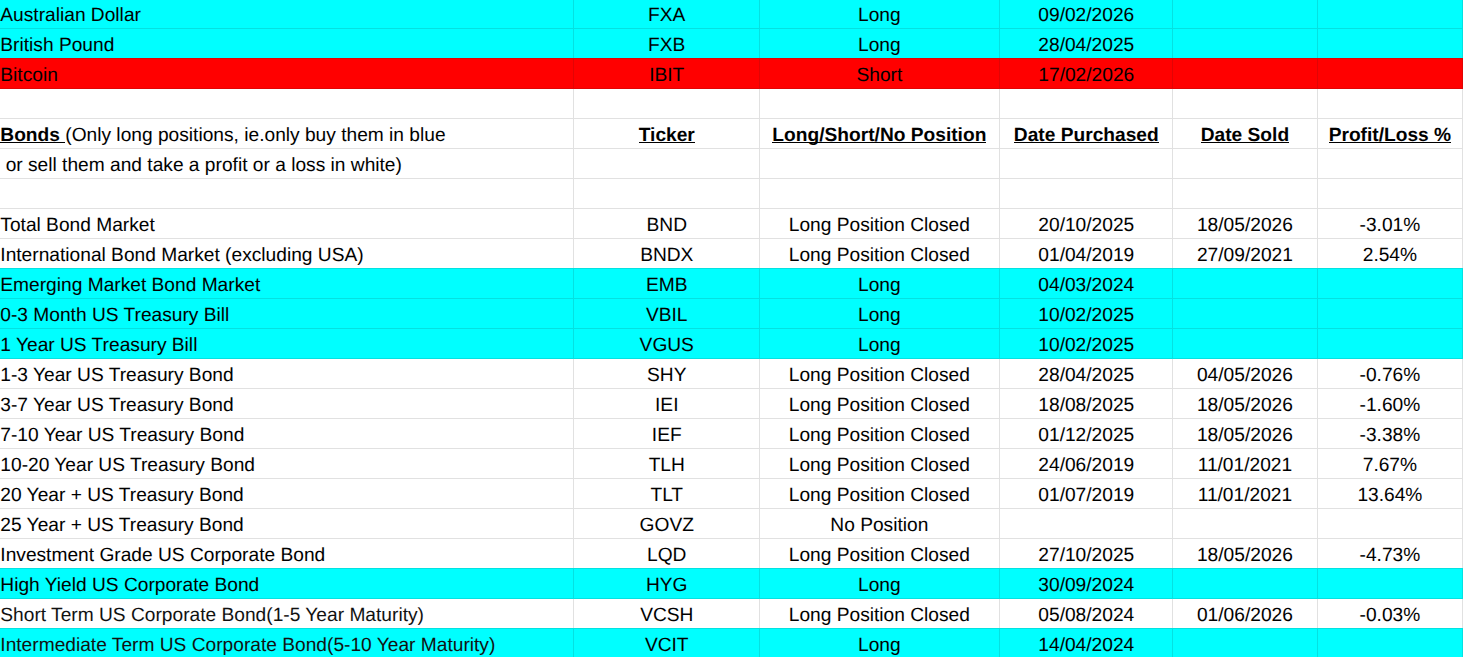
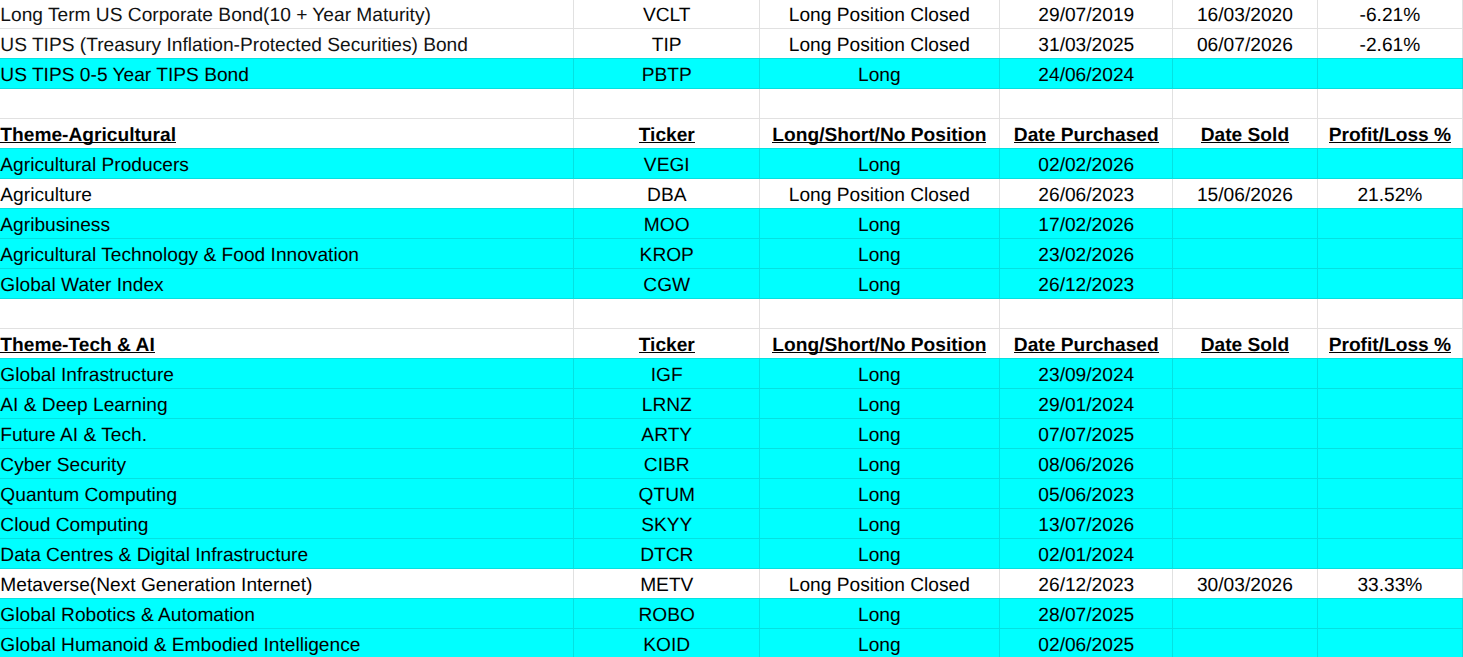
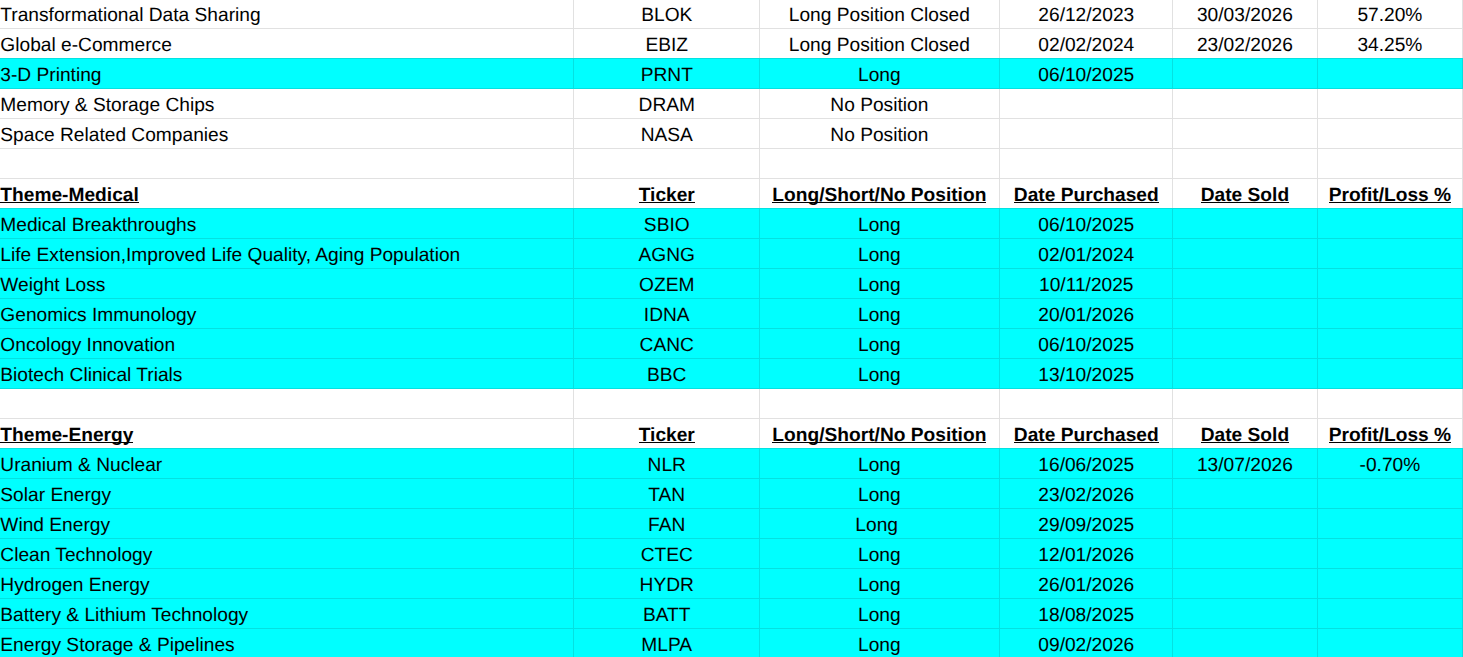
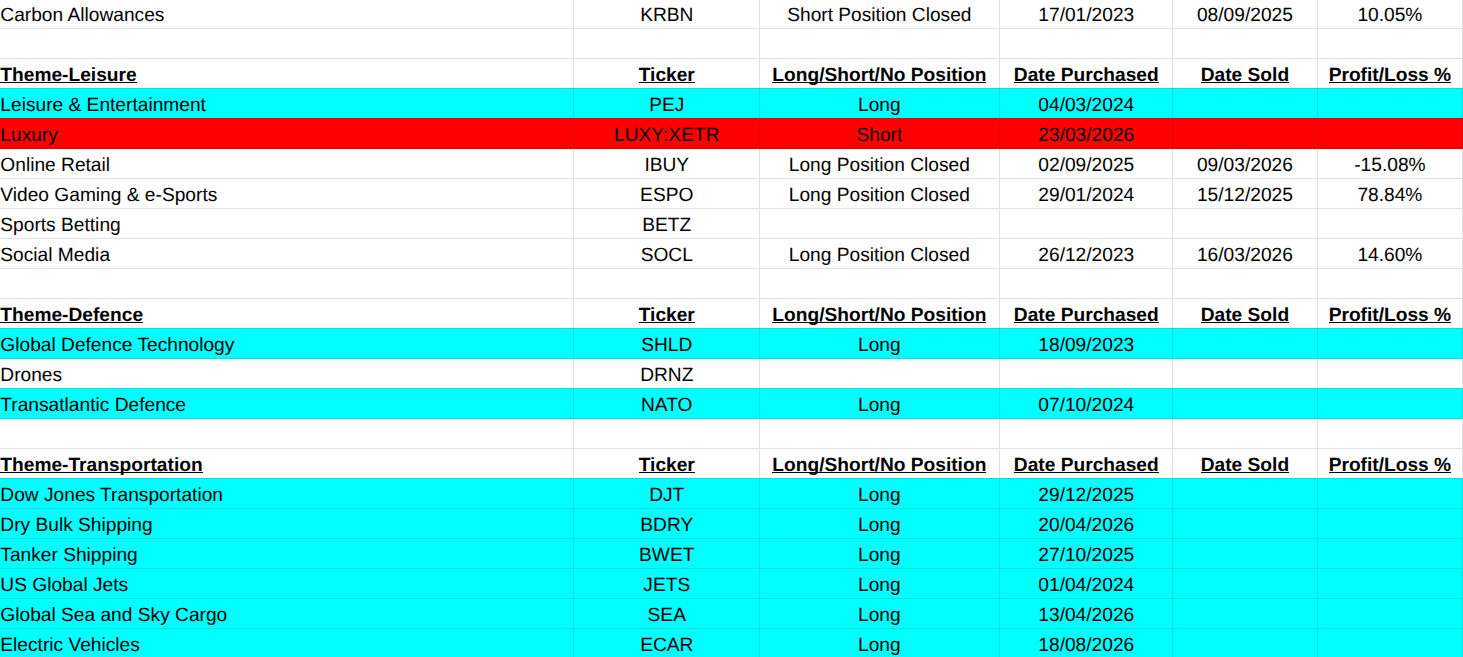
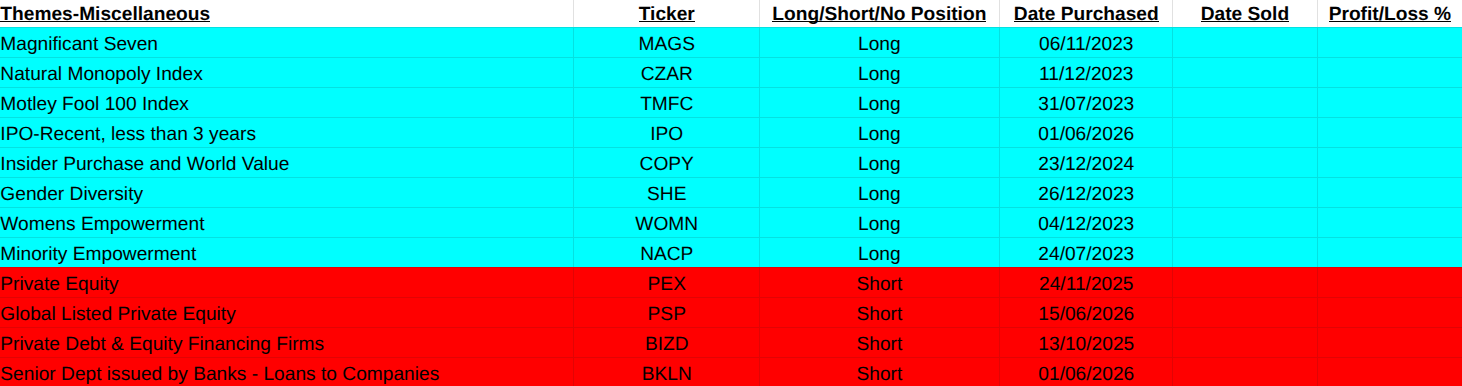
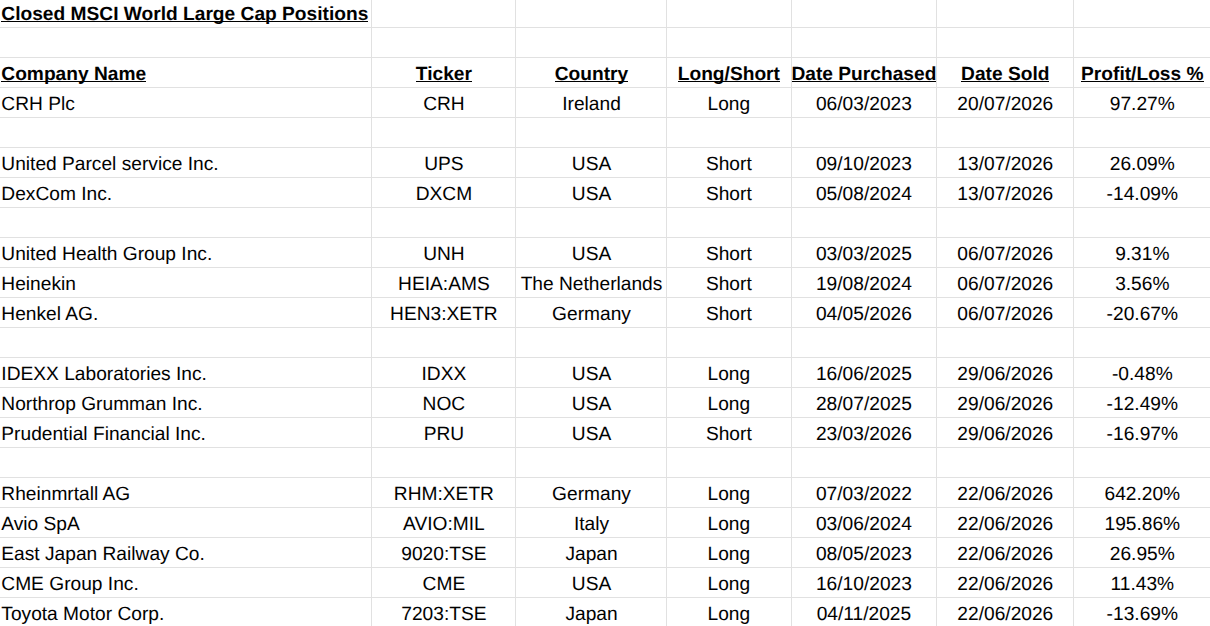
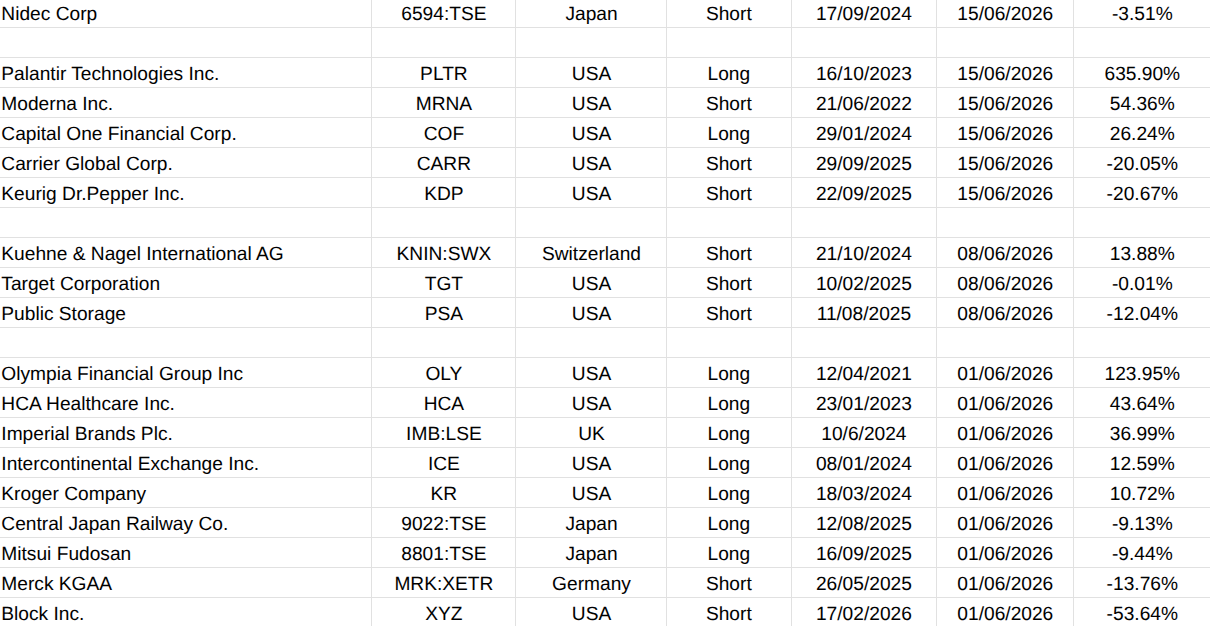
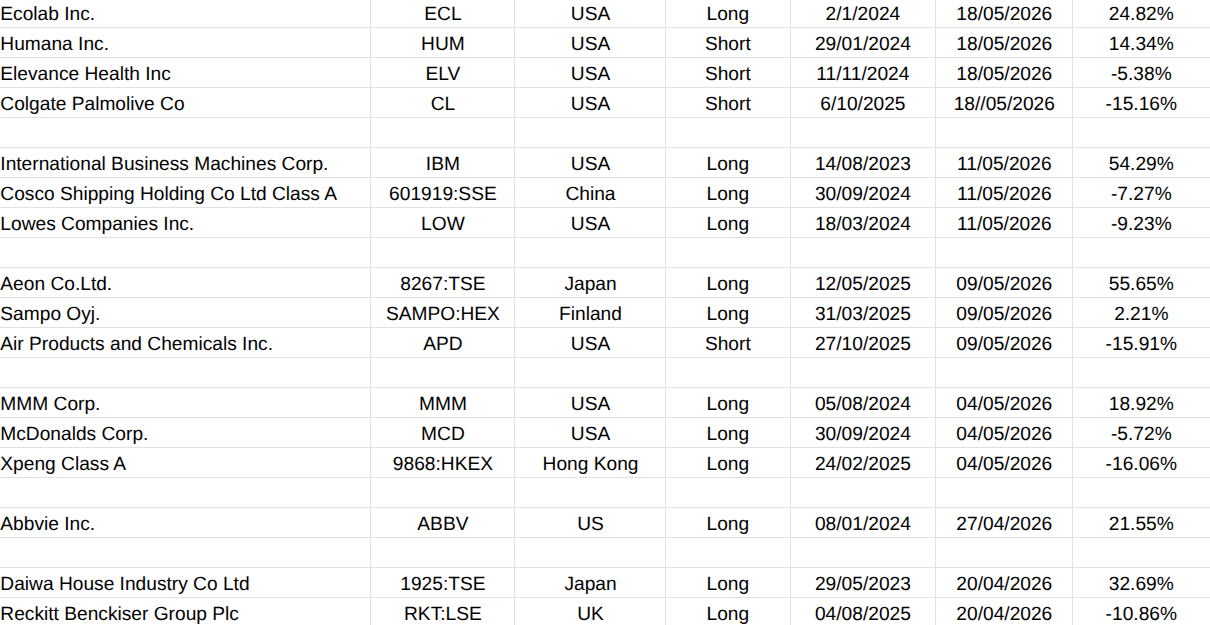
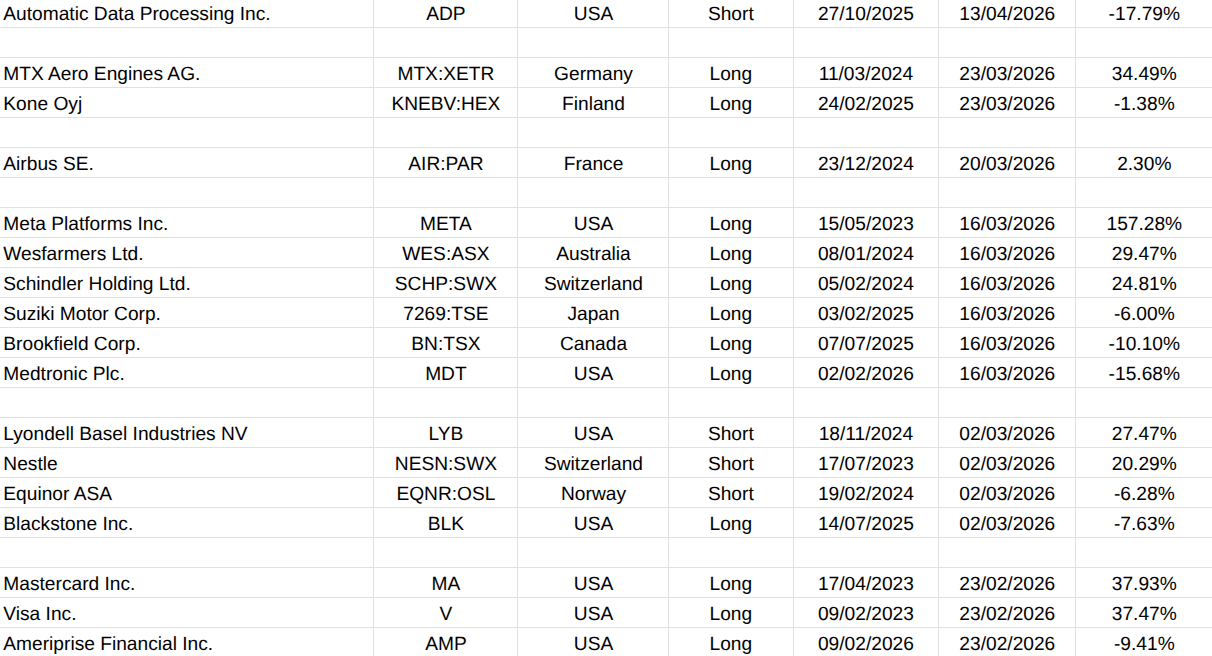
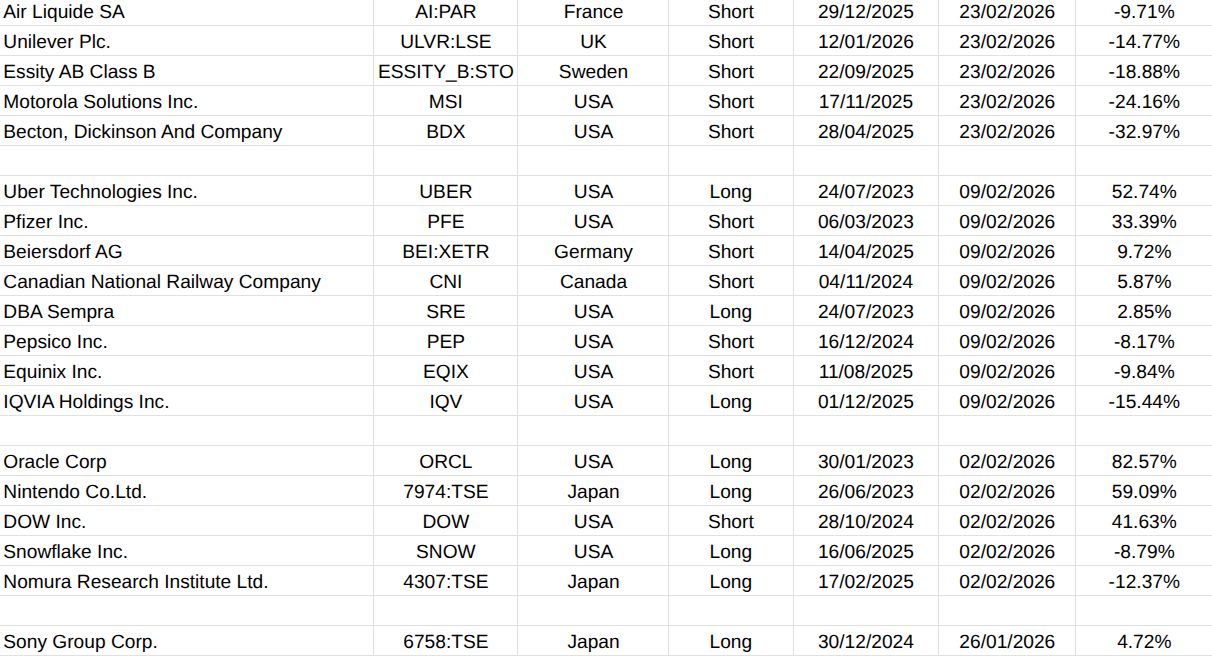
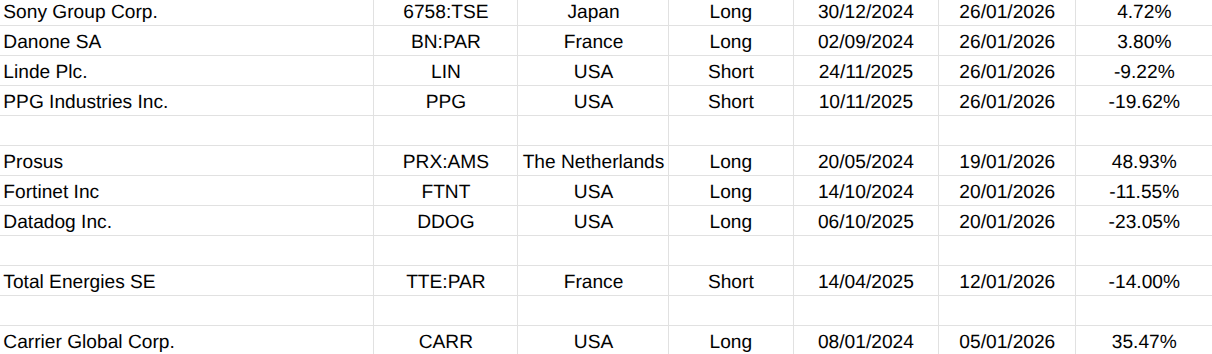
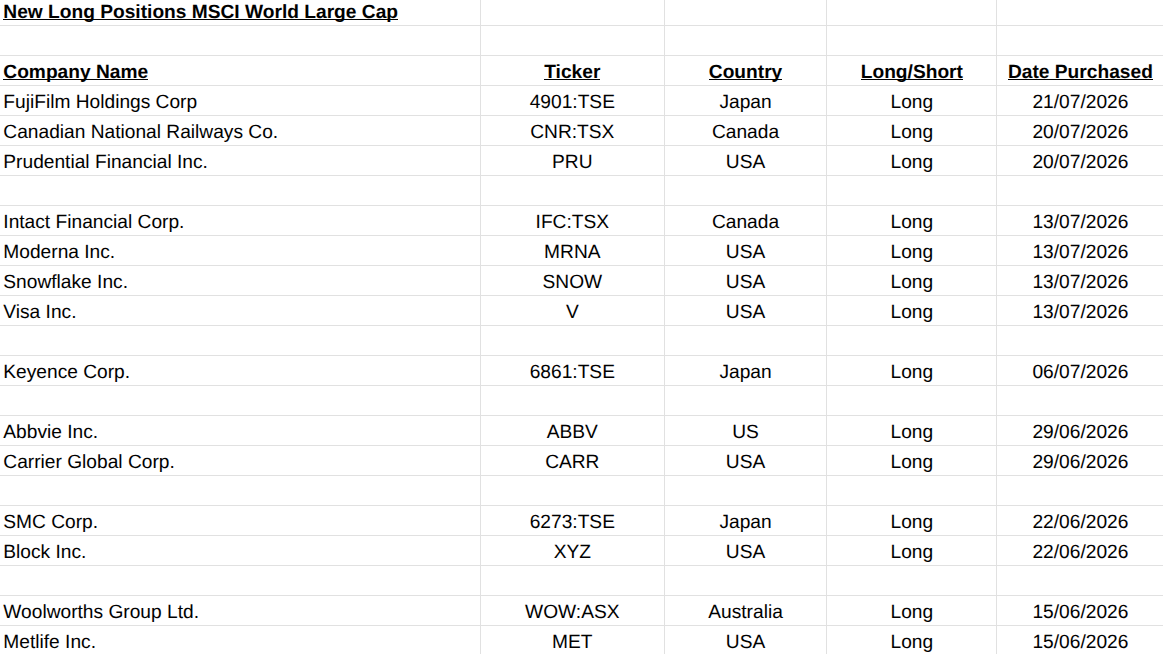
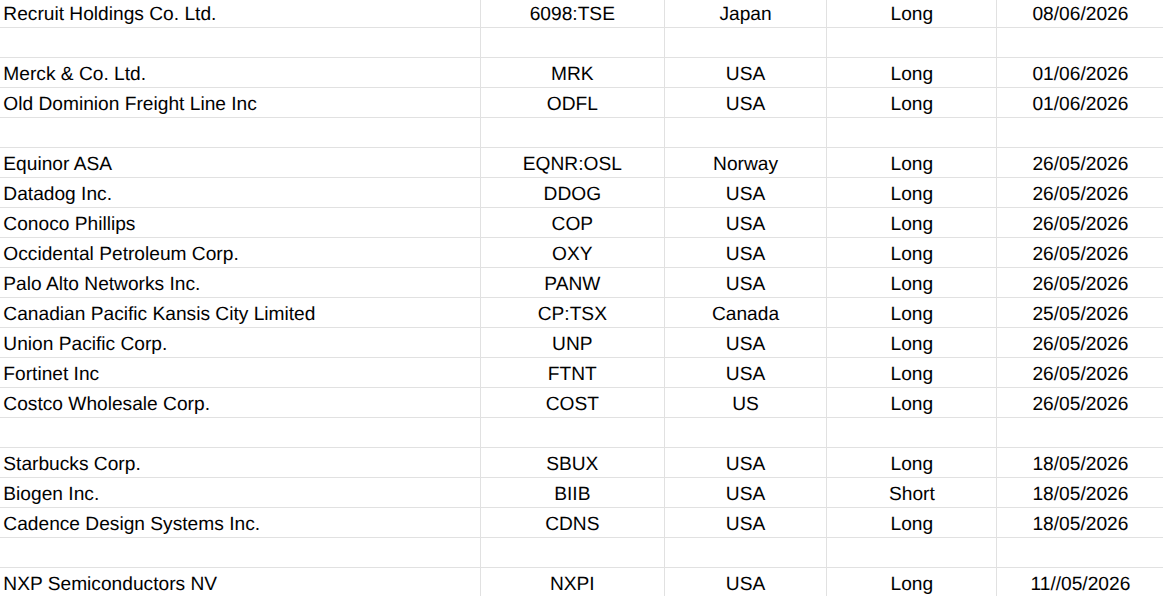
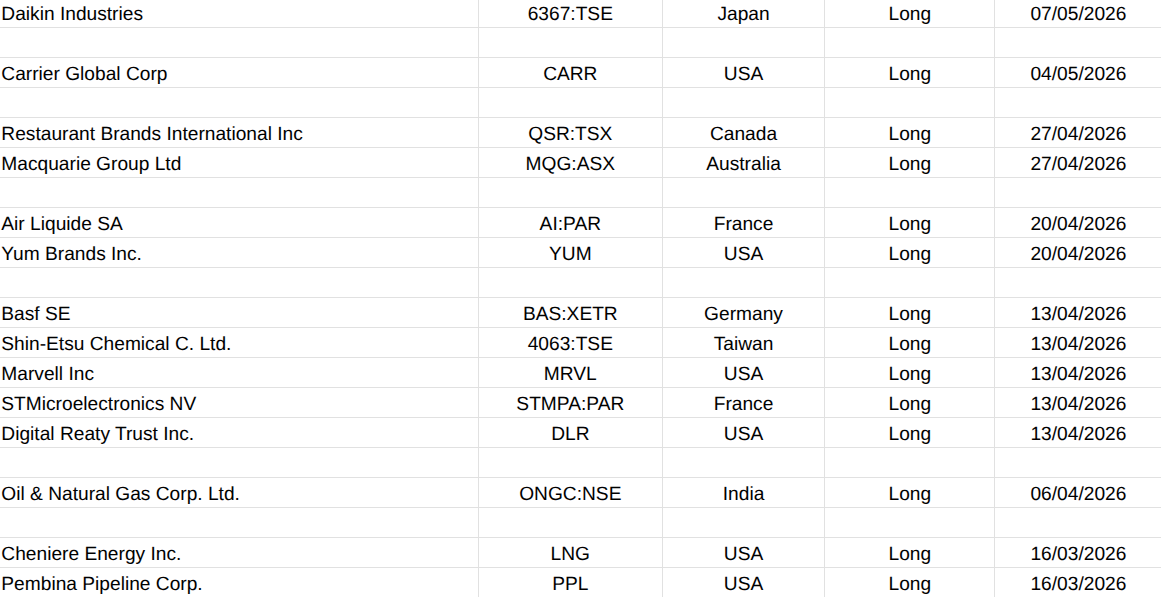
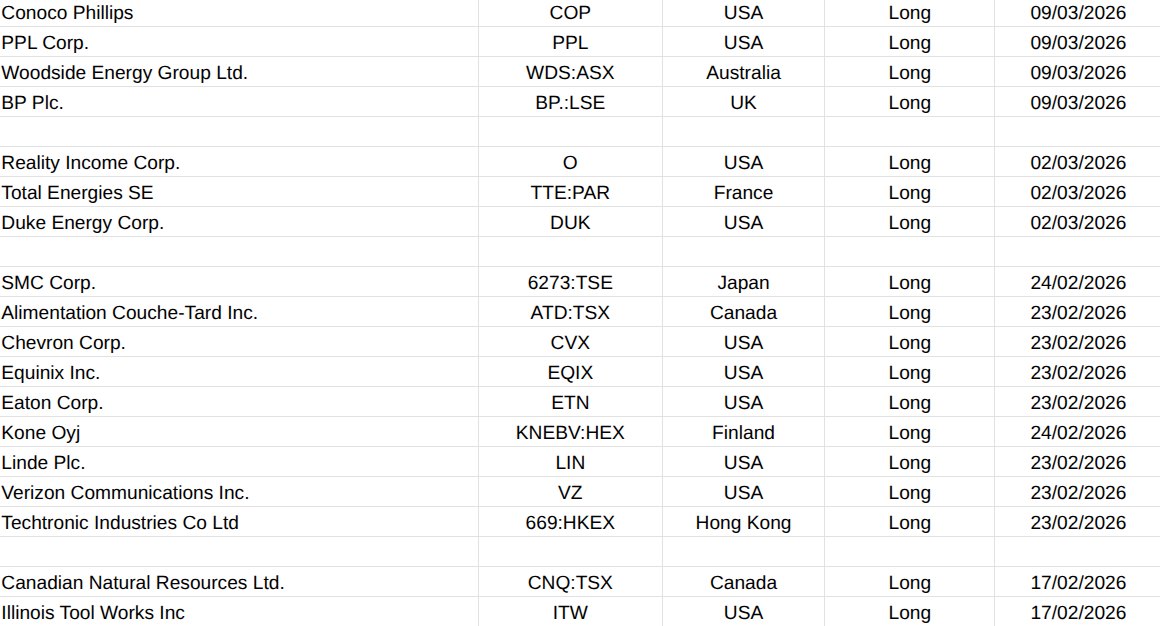
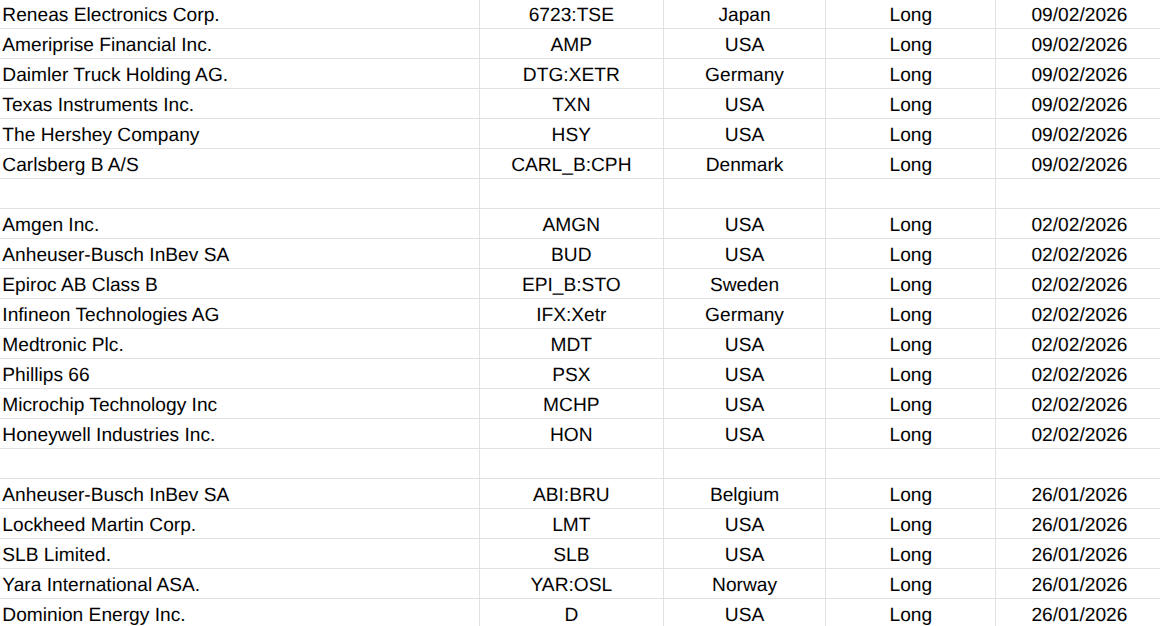
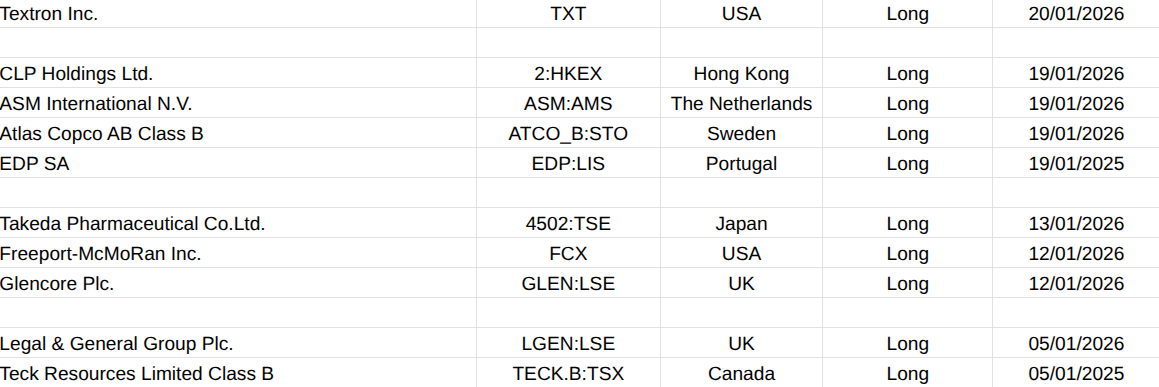
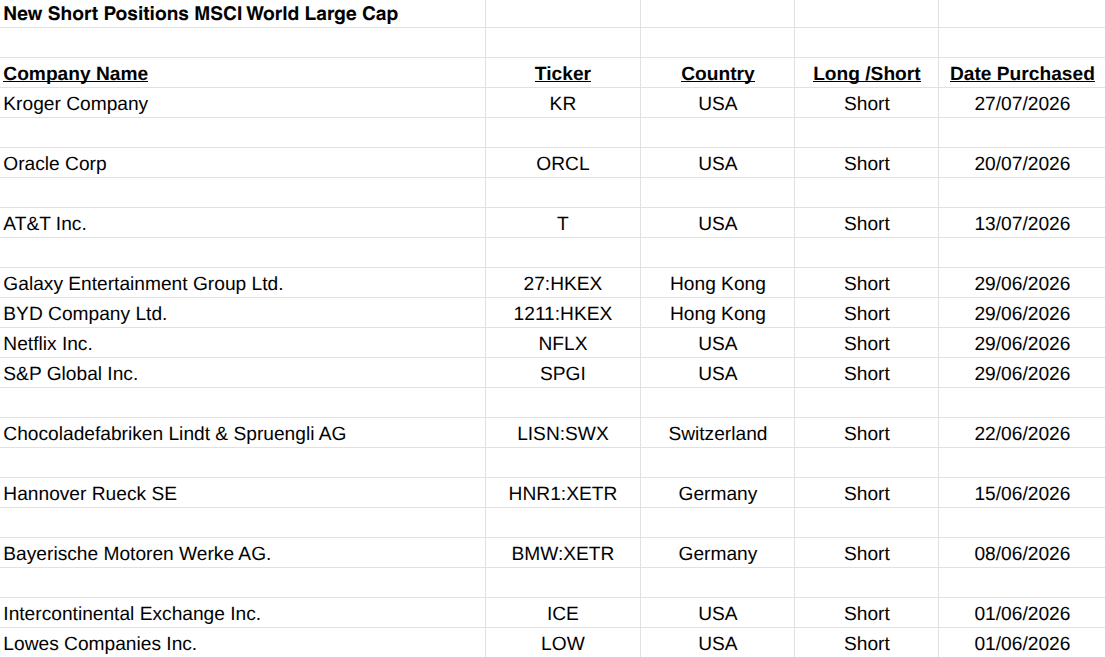
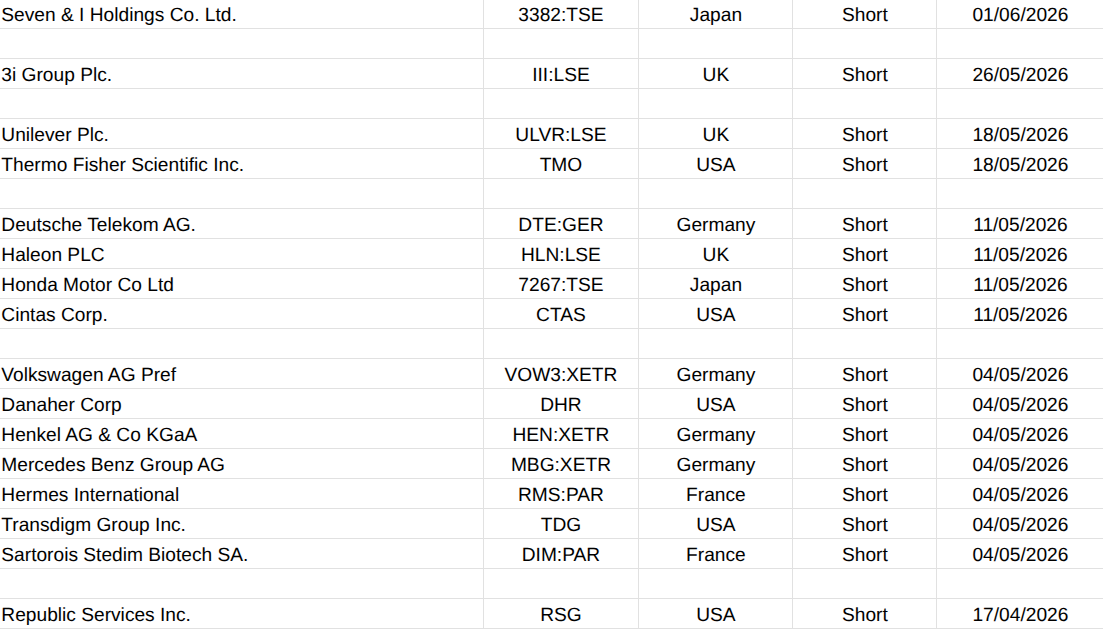
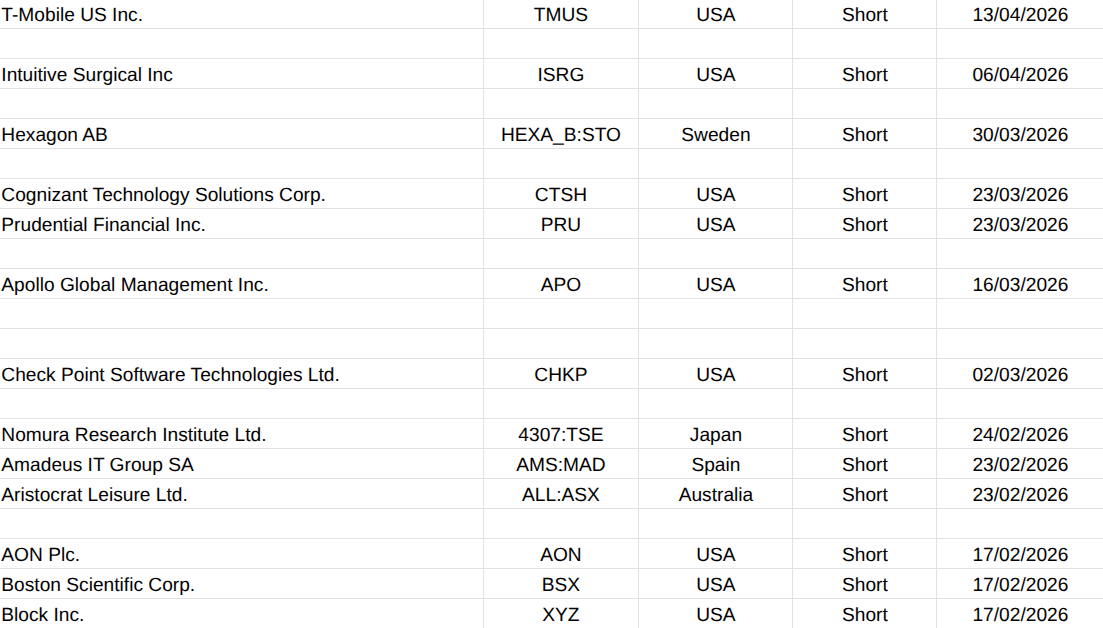
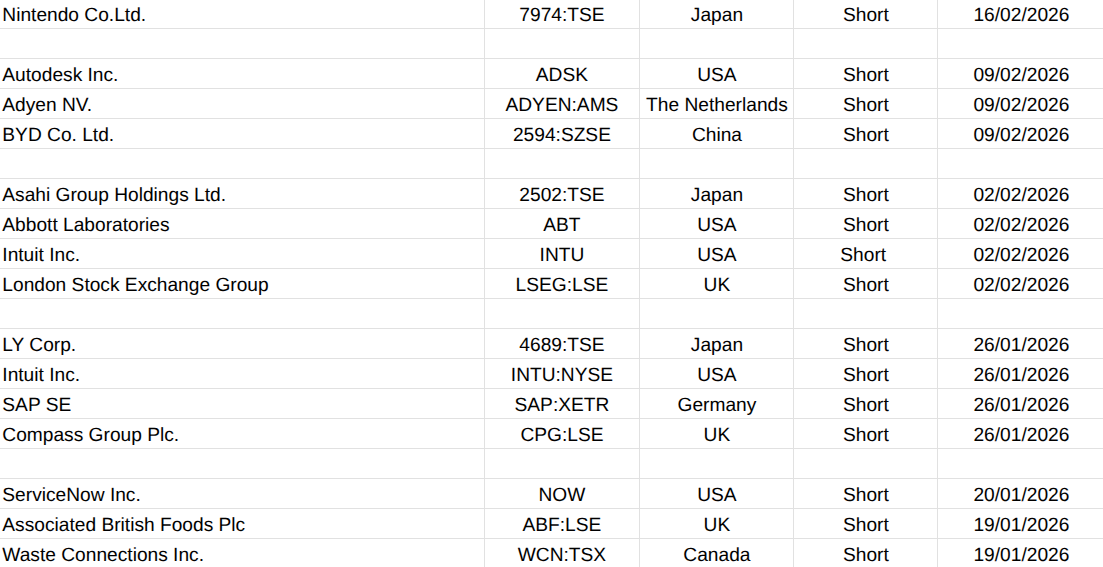

Note:The above trades do not take into consideration dividends on shares or coupons on bonds. This is important because if you short a stock or bond the dividend will be taken from you. Therefore the safest strategy is never to short any instrument only buy an upwardly trending security and simply close your position when this ends. These trades are my view on the market and not me advising you to take any of these positions. Closed positions have losses and profits listed in percentages. Mainly as a record to myself so I keep honest in evaluating my strategy.
The list of stocks analysed are from the MSCI Large Cap list as of 01/01/2026.


Lots of info / statistics and financial analysis – most beyond me – tho buying back their own shares by the Big Tech – interesting observation.
Gudluk 👍
LikeLike
You’re a bit harsh on us economistS ! ________________________________
LikeLike
You are the exception Dan. You follow the numbers and make very grounded observations. Great to see Mayo win. Not a sheep will be shorn in Mayo tomorrow.
LikeLike